How Fast Do Children’s Feet Grow? A Year-by-Year Parent’s Guide
Published on:
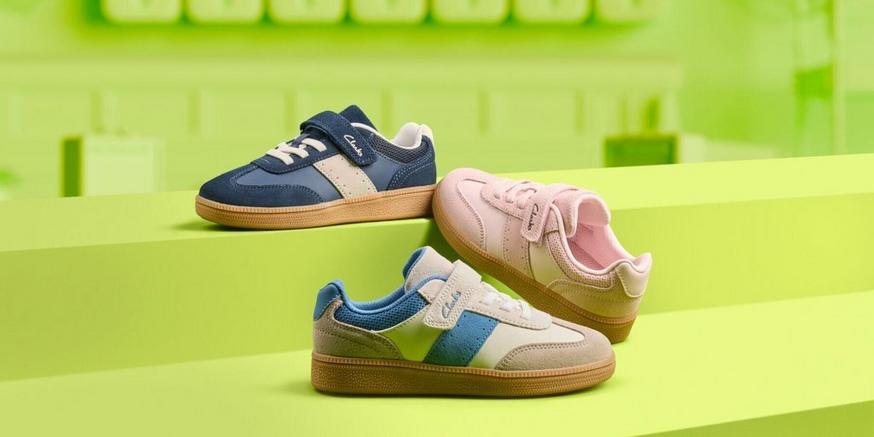
One minute their shoes seem absolutely fine, and the next they somehow look smaller, tighter or just not quite right. If you have ever wondered how that happens so quickly, you are not imagining it. Children’s feet really do change fast, especially in the early years. Clarks’ in-store fitting guidance is very clear on this point. In the first shoe-fitting years, kids’ feet can grow by up to two sizes a year, and by school age they still grow by around one size a year on average.
That is what makes this such a useful question for parents. When you understand how fast children’s feet grow, it becomes much easier to stay ahead of the next size change, spot when a pair may no longer feel right, and decide when it is worth measuring again. It also helps take some of the guesswork out of shopping. Rather than relying on memory or hoping a pair still fits because it was bought recently, you have a clearer idea of what is typical and what to look for.
The reassuring part is that you do not need to become an expert overnight. A few regular checks, a simple understanding of how growth tends to change by age, and the right measuring tools can make the whole process feel much more manageable.
Key Takeaways
- Children’s feet grow fastest in the earliest years and can change more quickly than many parents expect.
- In the first fitting years, growth can be as much as two sizes a year.
- By school age, feet still grow by around one size a year on average.
- Checking fit regularly is usually more helpful than relying on age alone.
- Subtle changes in behaviour can be an early clue that shoes are too small.
- Measuring both feet matters, especially if one is slightly bigger than the other.
- The best approach is not to panic-buy. It is to check fit little and often, then act when it is needed.
Why Children’s Foot Growth Can Feel so Unpredictable
Part of what makes this topic tricky is that growth does not always happen in a tidy, steady line. Sometimes it feels gradual. Sometimes it feels as though a child has grown out of a pair almost overnight. That is because feet often grow in bursts rather than in a perfectly even rhythm.
Children are also unlikely to explain fit issues the way an adult would. They may not say, “These feel tight across the toes,” or “I need more width.” More often, they simply seem less keen to wear a pair, take them off at the first opportunity, or start saying they do not like shoes they were happy in a few weeks earlier.
Another reason it can catch parents out is that children’s feet are not only getting longer. They are developing in shape too. So even if a pair still looks wearable from the outside, it may no longer feel quite right in length, width or overall comfort.
That is why measuring regularly matters. It is not about being overly cautious. It is about recognising that growing feet change faster than most everyday shopping habits do.
So, How Fast Do Children’s Feet Grow?
The short answer is that they tend to grow fastest in baby and toddler years, then more steadily through school age, with individual variation all the way through later childhood.
Clarks’ fit guidance gives this a very useful real-world frame. In the earliest years, children’s feet can grow by up to two sizes a year. By school age, they continue to grow by around one size a year on average. That is a helpful benchmark because it explains why shoes can suddenly feel different even if they were bought fairly recently.
The key thing to remember is that this is not a promise that every child will follow exactly the same pattern. Some move through sizes quickly. Others stay in the same size longer than expected. Both can be completely normal. What matters is having a rough sense of the pace, then checking your own child’s fit often enough to notice when something changes.
A Year-by-Year Guide to Children’s Foot Growth
-
● Babies from 0 to 12 Months
In the first year, growth can feel especially quick because everything changes so rapidly. Feet are part of that story. At this stage, parents are often focused less on long periods of wear and more on comfort, softness and enough room for natural movement.
If your baby is beginning to pull up, cruise or take first steps, fit still matters even if shoes are worn for shorter periods. Babies may not be covering big distances, but their feet are developing quickly. This is one of the stages where regular checks are especially worthwhile because a pair can stop feeling right sooner than you expect.
-
● Toddlers from 1 to 3 Years
This is often the stage when parents notice change most dramatically. Toddlers go from wobbly first steps to full-speed everyday movement in what feels like no time at all. Their shoes start working harder, and their feet can still grow very quickly.
This is also the age where children are least likely to explain clearly when something feels wrong. They may not say a shoe is too small. They may simply pull it off, refuse it, or seem unsettled in it.
That is why regular measuring is so useful in these years. If you are shopping for this stage, it often makes sense to start with categories designed around those early active years, such as toddler shoes.
-
● Younger Kids from 4 to 7 Years
By this point, growth often feels a little less dramatic than it did in the toddler stage, but it is still happening steadily. Clarks’ in-store guidance notes that by school age, kids’ feet continue to grow by around one size a year on average. That is enough to affect comfort, even if it does not feel as rapid as the first years.
This is often when shoes are doing a lot of different jobs. School. Weekends. Parties. Playgrounds. Family outings. Because they are worn so often, it can be easy to assume a pair is still fine simply because it is familiar. But this is exactly the stage where regular fit checks continue to matter.
If your child is in this age band, it can be useful to browse by stage as well as size. Clarks’ younger kids shoes category reflects that shift into more active, everyday wear.
-
● Older Kids from 8 Years Onwards
Growth often slows compared with the earliest years, but it rarely stops suddenly. Older children can still surprise you with a noticeable size change, particularly as they move towards later childhood and early adolescence.
This stage can feel deceptive because parents sometimes assume that slower means settled. In reality, feet may stay the same for a while, then change enough to affect fit quite quickly. Older children are sometimes better at noticing discomfort, which helps, but it is still worth measuring rather than relying on guesswork.
If you are shopping at that stage, older kids shoes make sense as a natural next step once your child moves beyond younger kids’ styles.
How Often Should You Check Fit?
The simplest rule is this: the younger the child, the more often it is worth checking.
That does not mean measuring constantly. It just means building regular checks into your routine so you are less likely to miss a change. Younger children’s feet grow faster, and younger children are less likely to describe discomfort clearly. That combination is exactly why fit can slip under the radar.
For babies and toddlers, closer monitoring makes sense because growth can be quick. For younger school-age children, regular checks still matter because growth continues even when it feels less obvious. For older children, you may not need to check quite as often, but it is still worth remeasuring from time to time, especially if they mention discomfort or seem to have had a general growth spurt.
If you want an easier way to keep on top of this at home, it can help to purchase kids' foot measuring gauges. Clarks’ foot gauges page also signposts parents to the Measuring at Home Guide, the Size Calculator and fit-check support, which makes it a useful hub rather than just a product page.
When Do Kids’ Feet Stop Growing?
How to Tell if Shoes are Too Small?
This is often where parents want the clearest guidance, because children do not always come out and say, “These shoes are too tight.”
Sometimes they will. Often they will not.
A pair may be too small if your child:
- says their toes feel squashed
- seems reluctant to put the shoes on
- asks to take them off quickly
- gets red marks after wearing them
- seems fussier in that pair than they used to
- says they feel funny, uncomfortable or not right
- appears to have very little room left at the front
Learning how to tell if shoes are too small is often about noticing small changes rather than waiting for one dramatic complaint. Parents usually pick up on this more through behaviour than through exact language. A child may not connect the discomfort to the shoe itself. They may simply seem less happy in it than before.
If you suspect a pair is no longer right, the best next step is usually to measure again rather than trying to make the shoes last a little longer.
How to Measure Kids Shoe Size at Home?
Measuring at home does not need to be complicated, but it does help to use the right method.
Clarks’ size calculator page makes the order of accuracy very clear. The calculator is designed to be used with either a Clarks Foot Gauge or a tape measure, but Clarks also states that a normal tape measure is not the most accurate way to measure children’s feet. For the most precise result, they recommend using a Clarks Foot Gauge or booking an in-store fitting.
That matters because many parents search for how to measure kids shoe size and understandably assume that any rough measuring method will do. It may be enough to point you in the right direction, but if you want better accuracy, the Clarks approach is more specific.
A few practical points are worth remembering:
- measure when your child is standing
- measure both feet
- if there is a slight difference between feet, use the larger measurements
- use the calculator with the measurement method it is designed for
If you are measuring at home and want a clear next step afterwards, the shoe size calculator for toddlers & kids is the natural follow-on. Clarks notes there too that if one foot is slightly different, you should enter the largest length and width measurements.
What about Kids Shoe Size Chart Searches?
This is another very common part of parent intent. People look for a kids shoe size chart because they want clarity fast. And a chart can absolutely be helpful as a starting point.
But a chart is still only a starting point.
It helps you understand the sizing system. It helps you estimate where your child might sit. What it does not do is replace actual measurement. Two children of the same age can comfortably wear different sizes. One may have a broader foot. Another may simply be growing earlier or later.
That is why size charts work best when they sit alongside measurement, not instead of it.
Is toddler Shoe Size by Age Reliable?
It is useful, but only to a point.
Keywords like toddler shoe size by age are common because parents naturally want a shortcut. If a child is two, surely there must be a likely size. And yes, age can help you get a general sense of what might be normal.
But age is not fit.
A child’s age can help you think directionally, yet it will never tell you exactly what is happening with their foot right now. That is why age-based guidance is best used as background information, not as the final answer.
In practice, the best combination is:
- age for context
- regular checks for timing
- actual measurements for decision-making
Why Good Fit Matters Beyond Just Comfort
Comfort is the first thing most parents think about, and understandably so. But a good fit does more than make shoes feel nicer.
Well-fitting shoes help children move more naturally. They are less likely to rub, slip or feel awkward underfoot. They also support the kind of all-day wear that children’s shoes are expected to handle, from school runs and weekend outings to everyday play.
Clarks’ wider brand story reinforces why this matters. The company has long positioned itself around shoemaking expertise, comfort and understanding how feet move and develop. That is part of why fit guidance feels so central to the kids’ journey rather than like an afterthought.
From a parent’s point of view, good fit also tends to mean fewer wasted purchases. You are less likely to buy too early, buy too large, or keep a pair going after it has stopped being comfortable.
What if You Are Not Completely Sure?
This is where many parents end up, and it is completely normal. You have checked the shoes. You think they may be small. You have measured at home, but you are still not fully confident in the result. Or perhaps your child is between stages, and you want reassurance before buying again.
That is exactly where expert help can be useful. If you would rather take the uncertainty out of it, you can book an in-store fitting appointment. Clarks positions this as a free appointment with in-store experts, and their page also highlights that kids’ feet can grow quickly enough to make regular fittings worthwhile.
This can be especially helpful:
- after a noticeable growth spurt
- when moving into a new shoe category
- if your child is between sizes
- if you are unsure about width as well as length
- if your child is very young and difficult to measure at home
Thinking about Shoes by Age and Stage
Once you understand how growth changes over time, it becomes easier to see why shopping by stage can be useful too.
Toddlers need something different from younger school-age children, and those needs change again as kids get older. In the toddler years, parents are often thinking about first independent movement, comfort and secure fit. In the younger kids stage, shoes usually need to cope with much more everyday activity. By the older kids years, there is often more variation in routine, stronger preferences and a slightly different relationship with comfort and style.
That is why stage-based navigation can feel more intuitive than size alone. Clarks’ separate categories for toddler, younger kids and older kids reflect that reality and make the shopping journey feel more practical for parents trying to match shoes to development, not just numbers.
Common Mistakes Parents Make
Most parents are not careless about fit. They are simply busy, and growth can be surprisingly easy to miss.
A few common patterns come up again and again:
- assuming a pair is still fine because it was bought recently
- relying on a child to say when something feels small
- using age as the final answer instead of measuring
- buying too much growing room and hoping it works out
- checking length but forgetting that width matters too
- putting off measuring because everything looks fine from the outside
These are easy mistakes to make because they all sound reasonable. That is what makes a simple checking routine so useful. It reduces reliance on guesswork and makes you less likely to be caught out by a sudden change.
A simpler Way to Stay On Top of It
If the whole topic still feels like one more thing to keep track of, the easiest answer is to make it part of a low-effort routine.
Think in terms of habits:
- check fit regularly
- measure both feet
- use the larger foot if there is a slight difference
- use age as a guide, not a rule
- remeasure when a pair starts feeling different
- get expert help when you are unsure
That is usually enough.
Parents do not need to predict growth perfectly. They just need a clear, repeatable way to notice change before a pair becomes uncomfortable.
The Reassuring Truth for Parents
If you have ever felt slightly unsure about whether your child’s shoes still fit, that is very normal. Growing feet are one of those parenting details that seem simple in theory but change surprisingly quickly in real life.
The reassuring part is that you do not need to get it perfect every time. You just need to stay close enough to the changes that you can respond when they happen. That is really what this whole question comes down to.
Understanding how fast children’s feet grow does not mean you will never be surprised by the next size change. It simply means you are much more likely to spot it early, measure with confidence and choose the next pair knowing it truly fits.
FAQs about How Fast Children’s Feet Grow
-
Q: How fast do children’s feet grow in the early years?
A: Children’s feet usually grow fastest in the earliest years. Clarks notes that in the first fitting years, kids’ feet can grow by up to two sizes a year.
-
Q: When do kids feet stop growing?
A: There is no single age that applies to every child. Feet usually continue growing through childhood and into the teenage years, with the timing varying from one child to another.
-
Q: What age do feet stop growing?
A: Rather than one exact age, it is better to think of growth slowing in phases. It is usually fastest in the early years, steadier at school age, and more individual as children get older.
-
Q: How do I tell if shoes are too small?
A: Look out for red marks, reluctance to wear the shoes, complaints that toes feel squashed, or a child suddenly seeming unhappy in a pair they used to like.
-
Q: How often should I measure my child’s feet?
A: Younger children generally need closer monitoring because their feet grow faster. Older children still need regular checks, but not usually as often as babies and toddlers.
-
Q: How do I measure kids shoe size at home?
A: The most accurate home method is to use a Clarks Foot Gauge with the size calculator. Clarks also allows tape-measure measurements, but states that a normal tape measure is not the most accurate option.
-
Q: Is toddler shoe size by age reliable?
A: It is useful as a rough guide, but not as a final answer. Actual measurement is much more reliable than age alone.